Piazza Unità d’Italia: what to see
In short
Piazza Unità d’Italia is Trieste’s main square: three sides lined with 19th- and early 20th-century palaces, the fourth open to the sea. Look out for the Town Hall and its clock tower, the Government Palace with its mosaics, the Lloyd Triestino Palace, the Fountain of the Four Continents and the Column of Charles VI. Sunset is the best time to come, followed by the evening, when the blue lights in the paving come on.
What Piazza Unità d’Italia is like
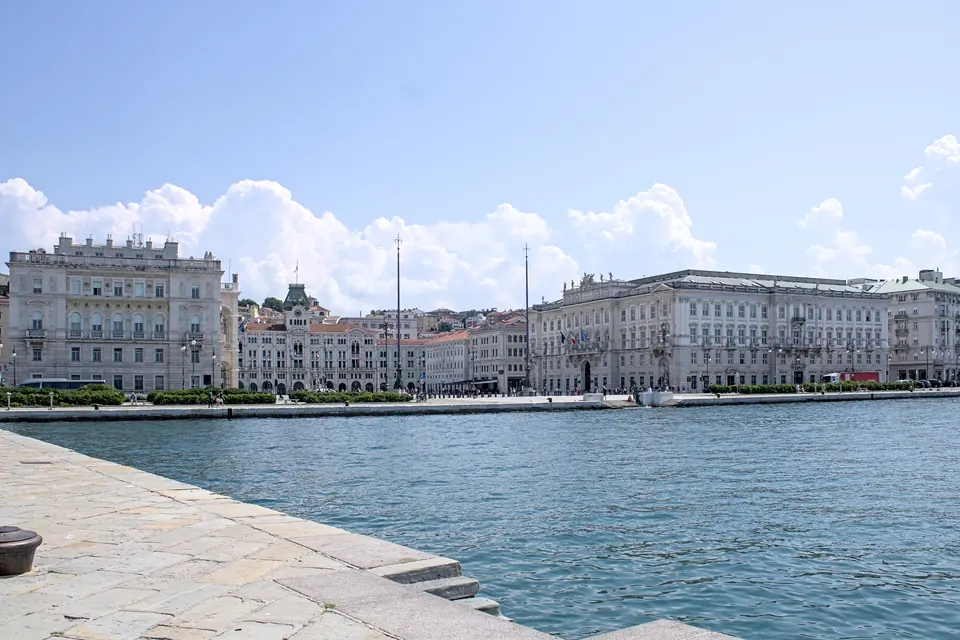
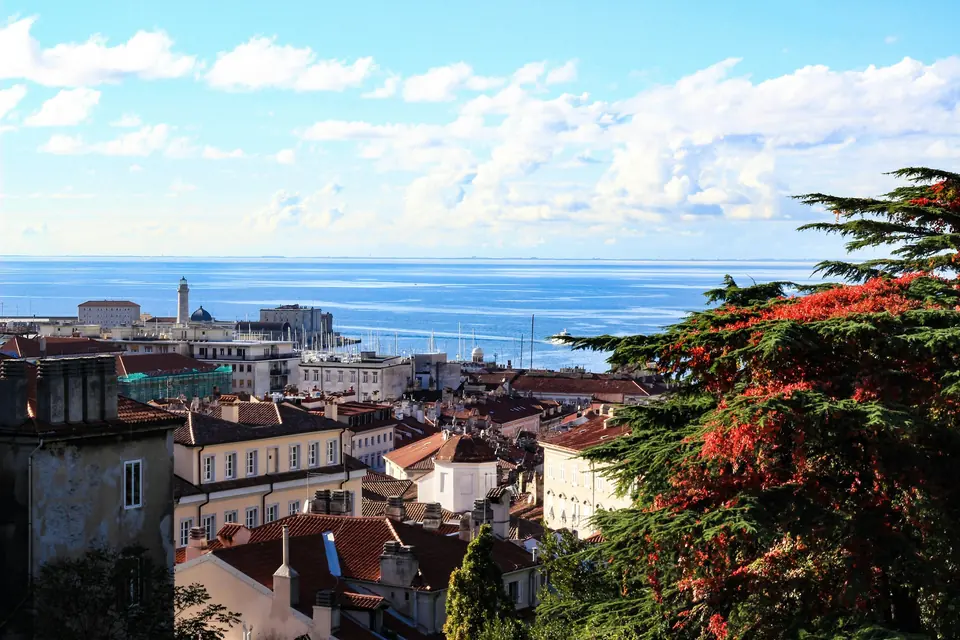
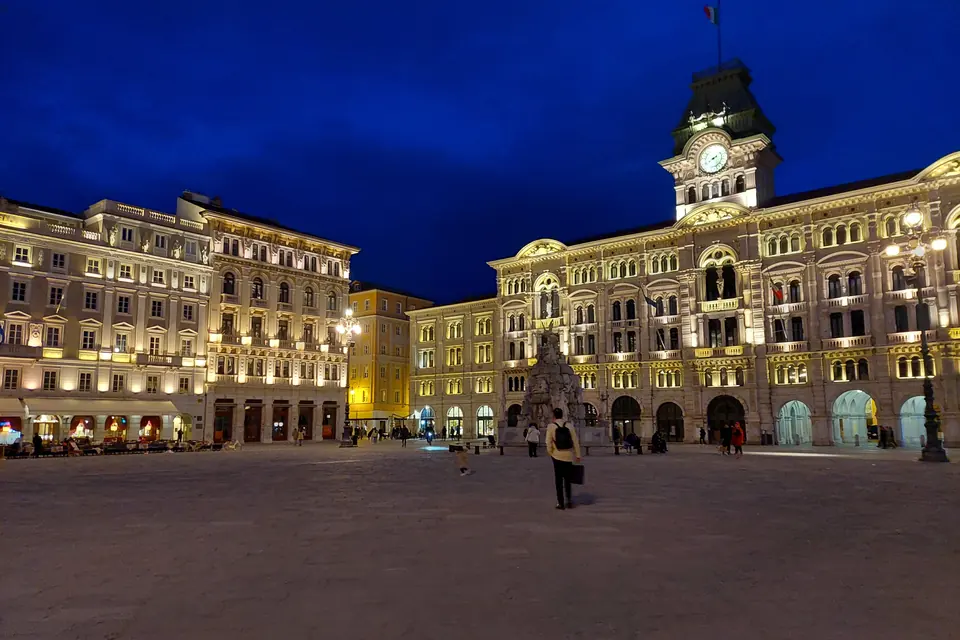
Piazza Unità d’Italia is the heart of Trieste and where almost everyone starts exploring the city. It is a vast square, often described as the largest in Europe facing the sea: three sides are enclosed by monumental buildings, while the fourth opens straight onto the waterfront and the gulf.
It was once simply called Piazza Grande. Its present look comes from 19th-century Habsburg Trieste, when the city was the Empire’s main port and wanted everyone to know it: elegant façades, government offices and shipping company headquarters, all facing the sea that brought the city its wealth.
What to see in Piazza Unità d’Italia
The Town Hall
The Palazzo del Municipio closes off the far end of the square, directly opposite the sea. It is the most recognisable building here, with a richly decorated façade and a clock tower in the middle. At the top, two bronze figures, known locally as Micheze and Jacheze, strike the hours on the bell.
The Government Palace
Standing on one of the long sides of the square, close to the sea, the Palazzo del Governo is easy to spot thanks to the gold and coloured mosaics on its façade, which glow in the afternoon sun. It was built in the early 20th century for the Habsburg governor of the city and now houses the Prefecture.
The Lloyd Triestino Palace
On the opposite side, also looking out to sea, is the former headquarters of the historic Lloyd shipping company, built in the late 19th century. Today it is the seat of the Friuli Venezia Giulia regional government. Note the two fountains with sculpture groups on either side of the façade.
Palazzo Stratti and Caffè degli Specchi
Next to the Government Palace stands Palazzo Stratti. On its ground floor is Caffè degli Specchi, one of Trieste’s historic cafés, with tables set out on the square. A little further along is Palazzo Pitteri, the oldest building on the square, dating from the 18th century, with plain neoclassical lines.
The Fountain of the Four Continents
In front of the Town Hall is an 18th-century fountain with statues representing the four continents known at the time: Europe, Asia, Africa and the Americas. A winged figure on top stands for the city. It dates from the years when Trieste was opening up as a port trading with the whole world.
The Column of Charles VI
Not far from the fountain rises a column topped by a statue of the Habsburg emperor Charles VI. In 1719 he made Trieste a free port, the decision that set off the growth of the modern city.
Why it’s worth visiting
Piazza Unità d’Italia is the best place to understand Trieste at a glance: the Habsburg legacy in the architecture, the sea as the horizon, and everyday local life as people cross it on their way to work or to the waterfront. It is also the natural starting point for almost any walk around the centre.
When to go: sunset and evening
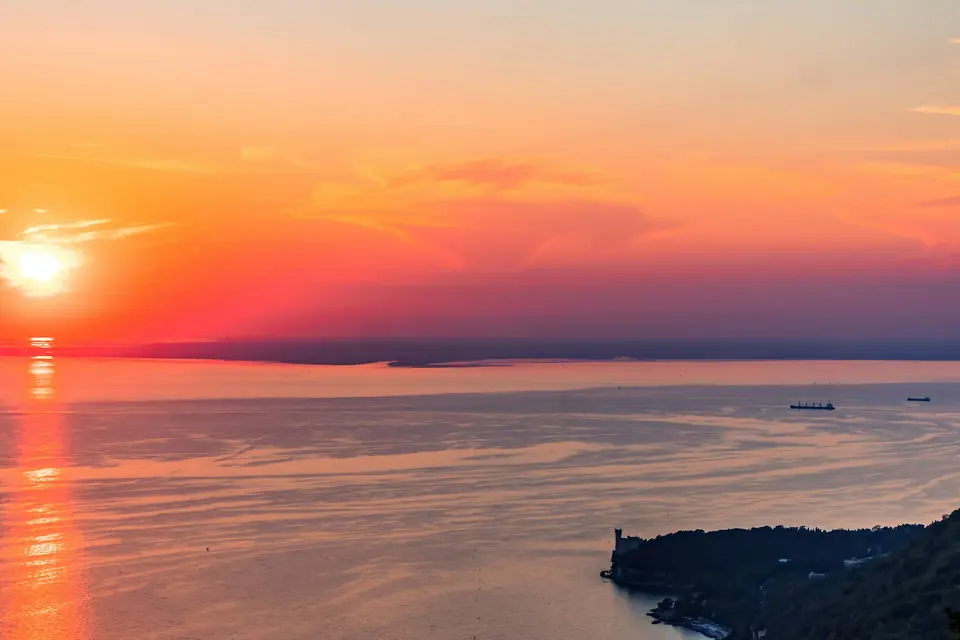
The square faces west, so sunset is the finest moment: the sun sinks into the gulf and warm light falls across the façades. After dark, the blue lights set into the ground come on, a line of glowing points running across the paving that gives the square an almost theatrical feel.
Early in the morning, by contrast, it is quiet and ideal for photographing the buildings without crowds.
Events in the square
Piazza Unità d’Italia is the city’s living room and the setting for its big public events: open-air concerts in summer, New Year’s Eve celebrations and sporting events. In October, during the Barcolana, the historic sailing regatta, the square and the nearby waterfront fill up with people and stands.
Tip: if you’re in town during a major event, parts of the square may be taken up by stages and barriers. Check dates on the official website of the city council or the event.
Practical information
The square is pedestrianised, flat and open at all times, including for pushchairs and wheelchairs. There are no tickets or opening hours. When the Bora is blowing hard, the wind can be very strong in the open space by the sea: stay close to the buildings and leave the umbrella closed.
How to get there
- From Casa Bora: about 12 minutes on foot, through the Borgo Teresiano and along the waterfront.
- From the Central Station: about 15 minutes on foot along the waterfront, all on the flat.
- By bus: several city bus lines stop along the waterfront, a short walk from the square. For routes and timetables, check the official Trieste Trasporti website.
Tip: arrive on foot along the waterfront with the sea on your right: the square suddenly opens up beside you, and it’s the best way to take in its size.
What to see nearby
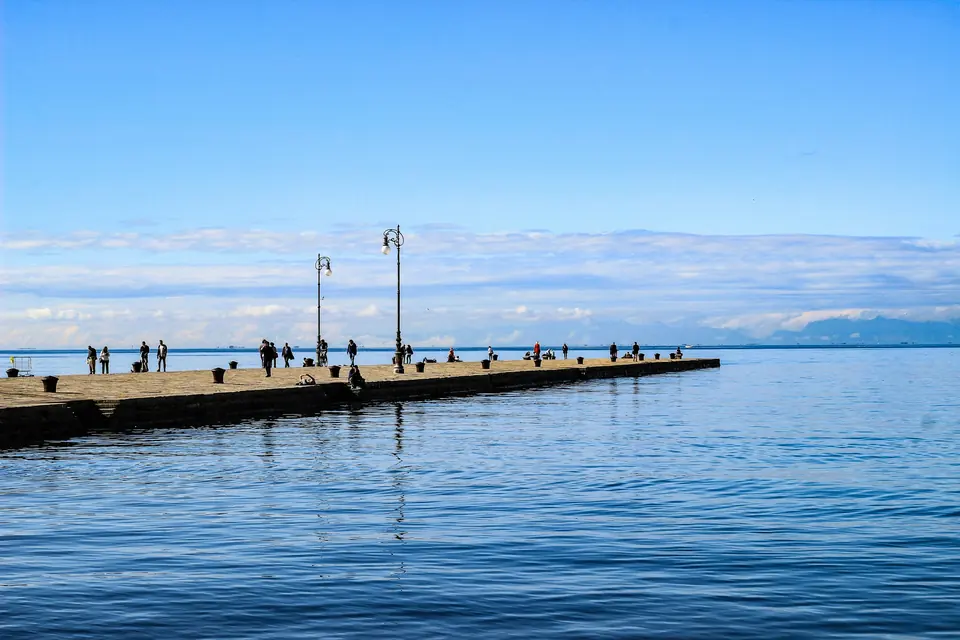
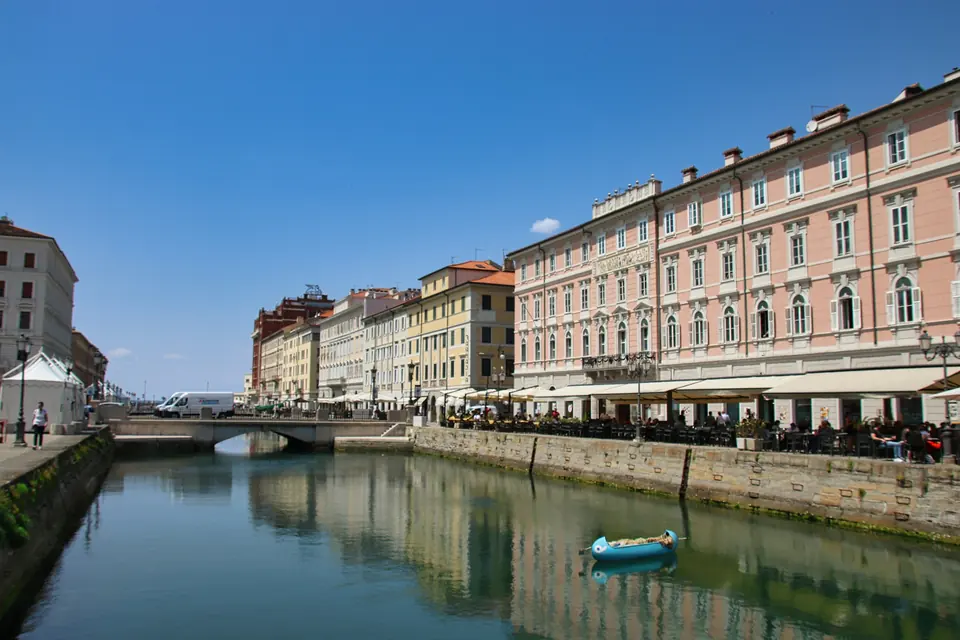
Cross the waterfront road and in two minutes you reach the Molo Audace, the long stone pier from which you can look back at the square from the sea. Behind the Town Hall lies the old town, with lanes climbing towards San Giusto hill, while five minutes to the north are the Canal Grande and the Borgo Teresiano.
If it’s your first visit, start with first time in Trieste; to plan your days, try the Trieste in two days itinerary. For more viewpoints over the gulf, read sea views in Trieste.
Frequently asked questions
Why is Piazza Unità d’Italia so famous?
It is one of the largest squares in Europe to open directly onto the sea, enclosed on three sides by historic Habsburg-era palaces. It is the symbol of Trieste and the starting point for almost any visit to the centre.
When is the best time to visit Piazza Unità d’Italia?
At sunset, when the sun sinks into the gulf and lights up the façades. Straight afterwards the blue lights in the paving come on and the square looks completely different.
What are the blue lights in Piazza Unità?
They are small lights set into the paving that come on in the evening and run across the square. They are not a temporary decoration but part of the square’s permanent lighting.
How long do you need to visit Piazza Unità d’Italia?
Thirty to sixty minutes is enough to see the palaces, the fountain and the column. It pairs well with the nearby Molo Audace, two minutes away on foot.
Information is indicative: opening times, prices and services may change, so always check the official websites before your visit.