First time in Trieste: what to see
In short
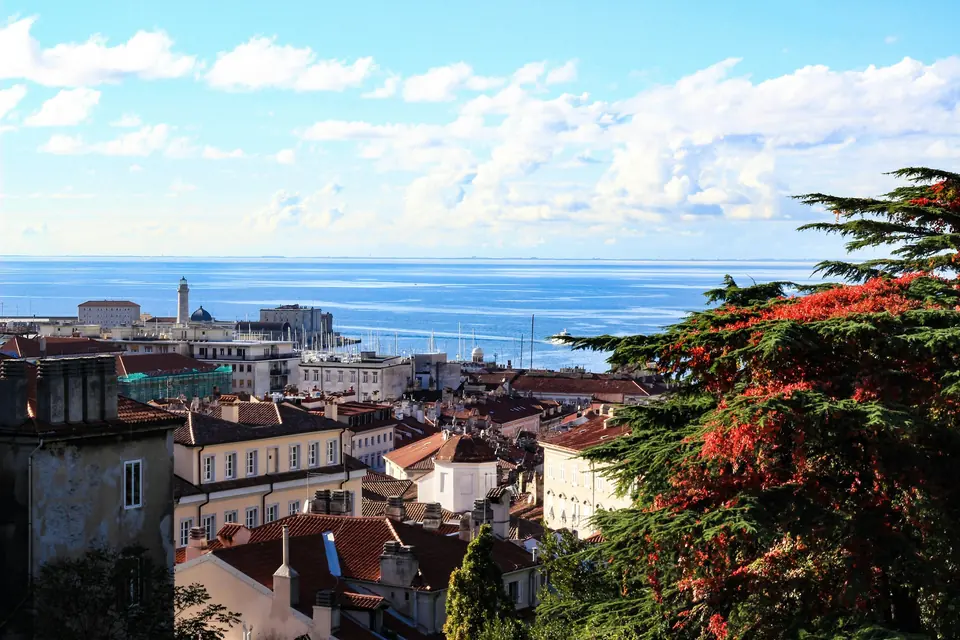
On your first visit to Trieste, don’t miss Piazza Unità d’Italia, the Molo Audace, the Grand Canal, the old town, San Giusto hill, a historic café, Barcola and Miramare Castle. The city is small and easy to read: the centre sits between the sea and the hill, the coast leads out to Barcola and Miramare, and above it all rises the Karst plateau.
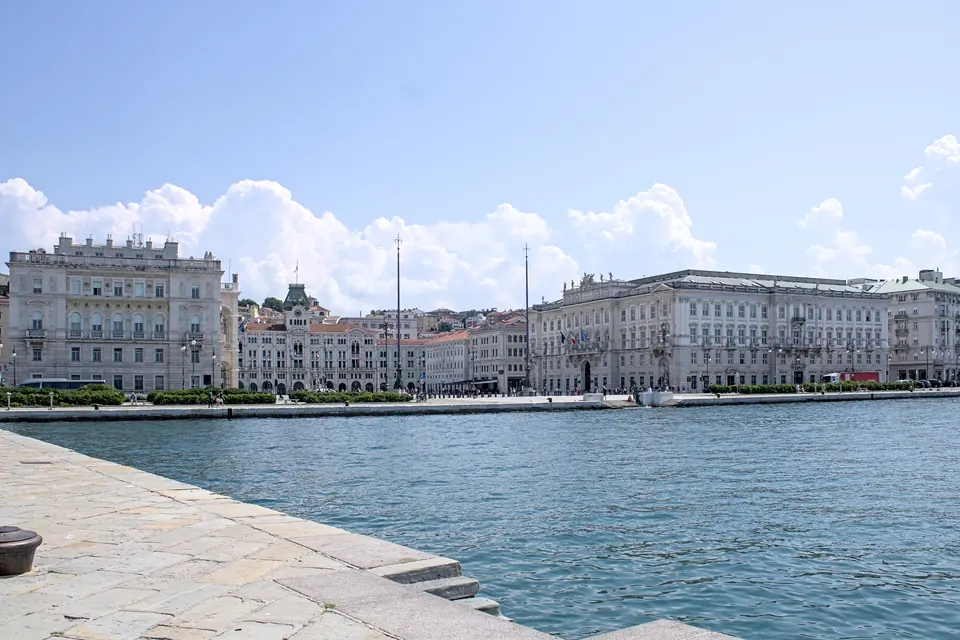
What to see in Trieste on your first visit
Trieste tends to surprise first-time visitors: a seaside city with buildings fit for a capital, literary cafés, churches of many different communities and a wild limestone plateau just minutes from the centre. It is not big, and two days are enough to get to know it well.
This guide is here to help you find your bearings: what not to miss, how the city is laid out, a few useful words and how to get around. Once you know how long you are staying, you will find a practical plan in Trieste in two days or Trieste at the weekend.
10 things not to miss
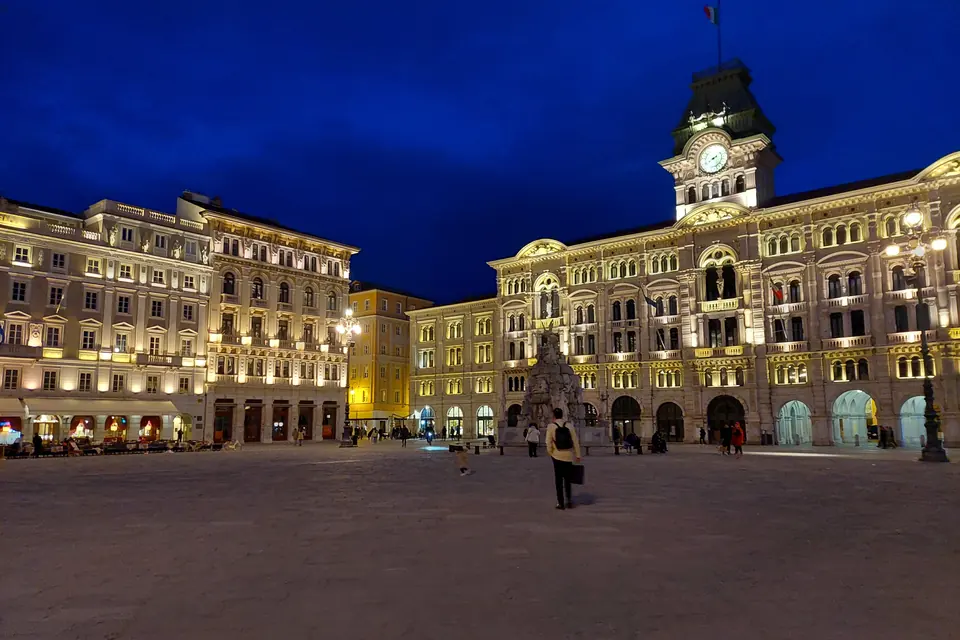
1. Piazza Unità d’Italia
The heart of the city opens straight onto the sea, with no buildings closing it off on the waterside. Around it stand the Town Hall, the Palazzo del Governo and the former Lloyd Triestino building. It is worth seeing twice: by day and in the evening, when it is lit up. Full details on the Piazza Unità d’Italia page.
2. Molo Audace
The long stone pier in front of the square is the simplest and most Triestine walk there is. From the end you see the whole city behind you and the gulf ahead. At sunset, everyone stops here. Read more about the Molo Audace.
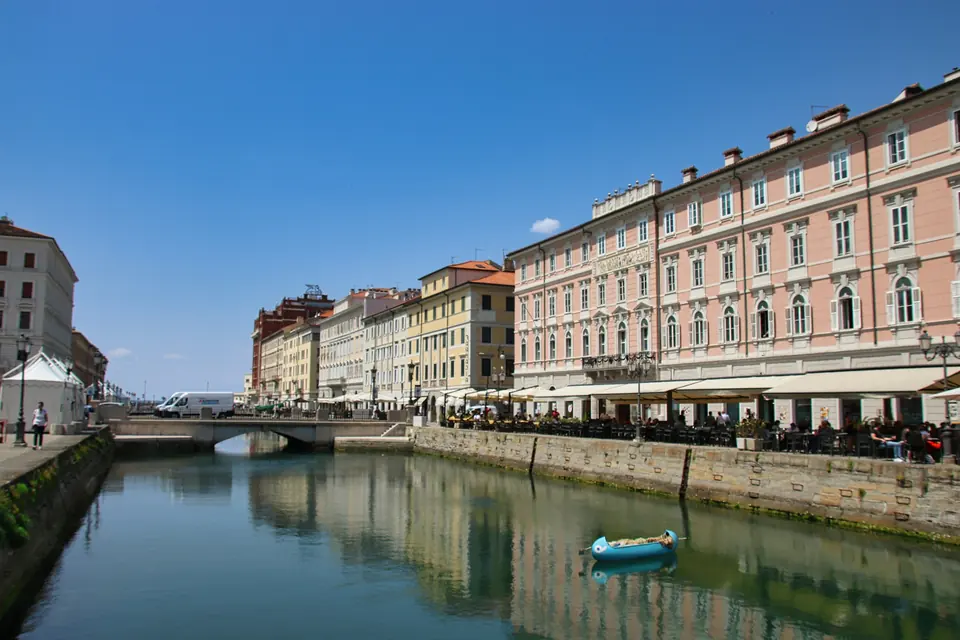
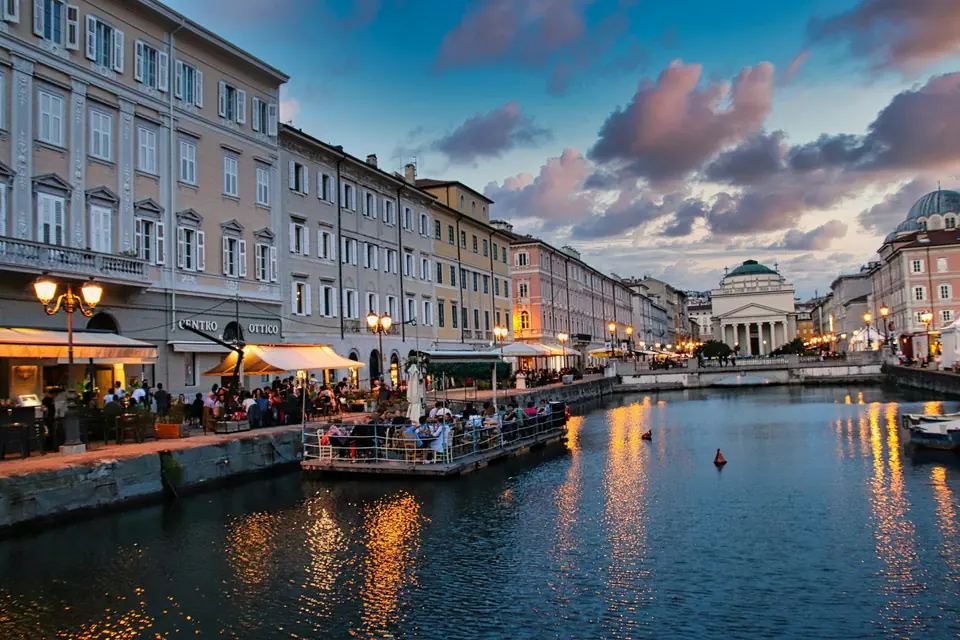
3. The Grand Canal and Borgo Teresiano
The Grand Canal, dug in the 18th century, brings the sea into Borgo Teresiano, the grid-plan district built under the Habsburgs. At the far end is the church of Sant’Antonio Taumaturgo, and on the Ponte Rosso stands the statue of James Joyce.
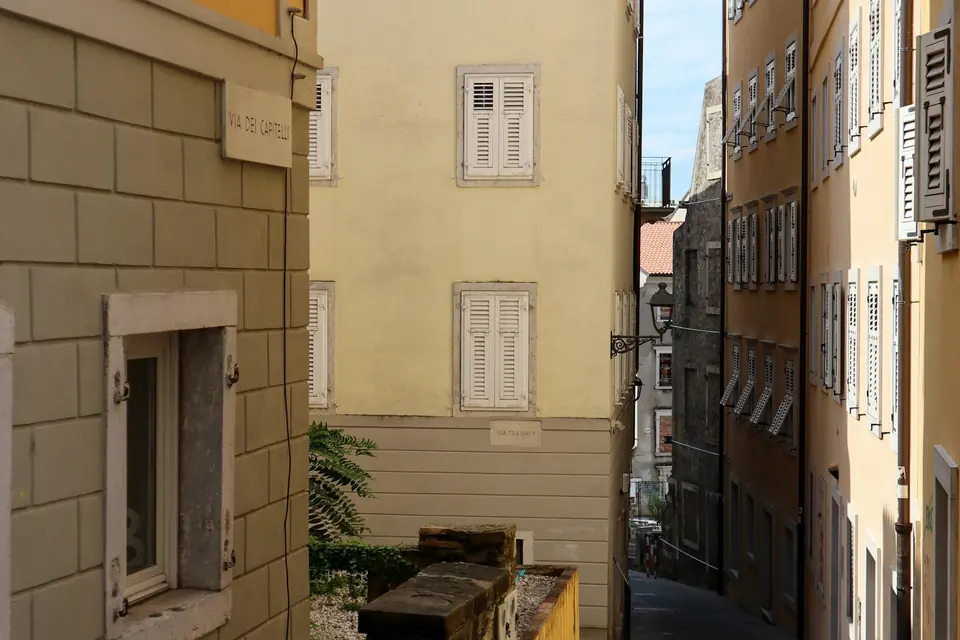
4. The old town, Arco di Riccardo and the Roman Theatre
Behind Piazza Unità the lanes of the old town begin. Here you will find the Arco di Riccardo, an ancient Roman gateway, and the Roman Theatre at the foot of the hill. These are small places, best discovered by wandering without hurrying.
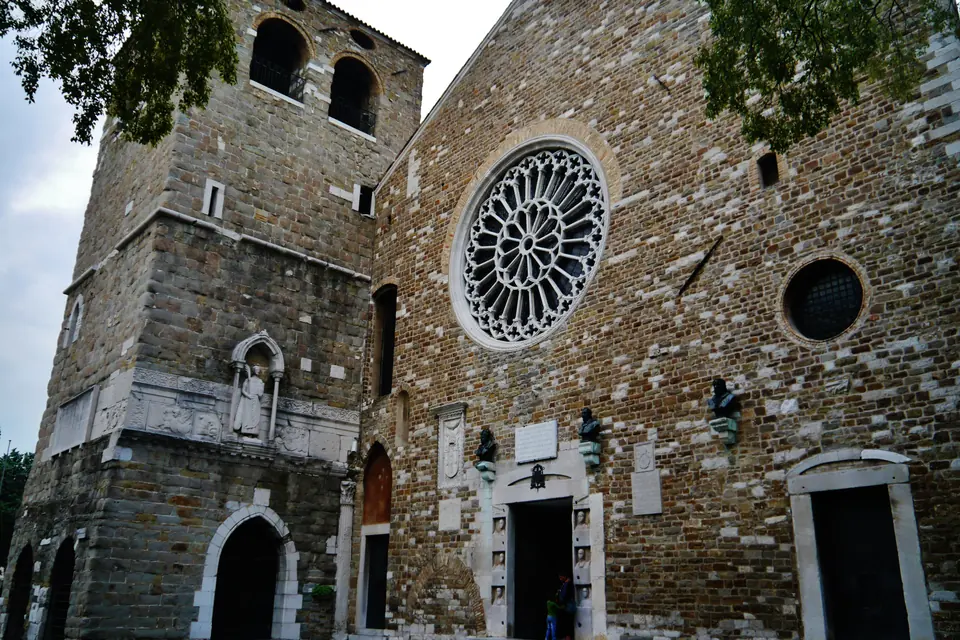
5. San Giusto hill
At the top of the hill are the cathedral, the castle and the remains of the Roman forum: the oldest part of the city. The walk up from the centre takes around 15–20 minutes. Everything you need is on the San Giusto hill page.
6. A historic café
Coffee is taken seriously in Trieste: for a long time a large share of the coffee arriving in Italy and Europe has passed through its port. Sit down at least once in a historic café such as Caffè San Marco, Caffè degli Specchi, Caffè Tommaseo or Caffè Torinese. You will find the words for ordering further down.
7. The churches of the city’s communities
For centuries Trieste was a city of merchants from all over the Mediterranean and Central Europe. You can see it in the Serbian Orthodox church of San Spiridione on the Grand Canal, the Greek Orthodox church of San Nicolò on the waterfront and the large synagogue in the centre.
8. Barcola
The seafront at Barcola is where Triestines go to swim, sunbathe and stroll. It is 10–15 minutes away on bus 6, or a 35–40-minute walk along the waterfront.
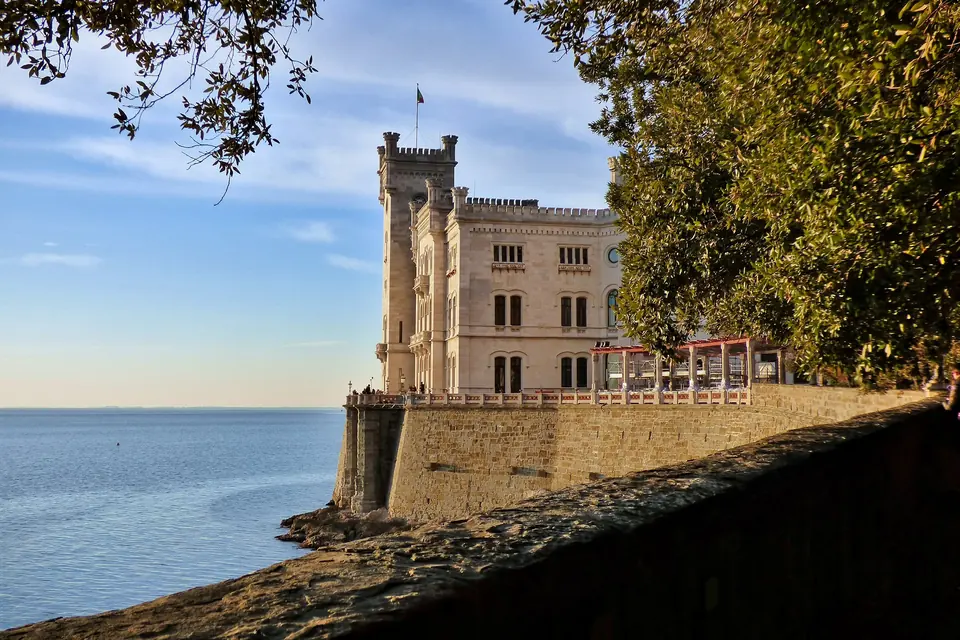
9. Miramare Castle
The white castle built for Archduke Maximilian of Habsburg in the mid-19th century stands on a headland about 7 km from the centre, with a large park by the sea. For visiting and getting there, see the Miramare Castle page.
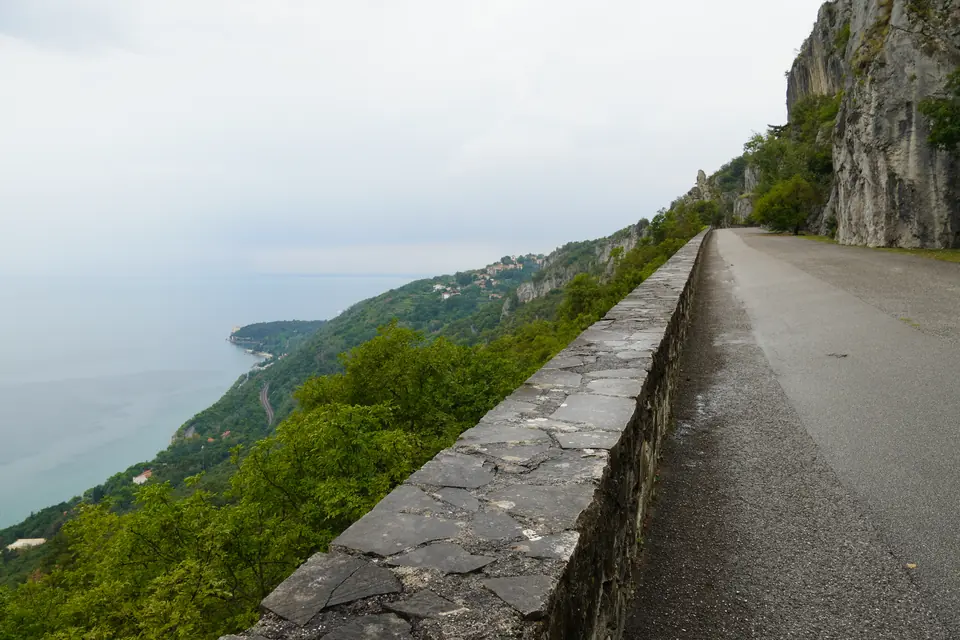
10. The Karst above the city
Behind Trieste rises the Karst plateau, with woodland and limestone. The easiest way to get a feel for it is the Strada Napoleonica, a panoramic path between Opicina and Prosecco with views over the gulf. Find out more in Trieste: sea and Karst.
How Trieste is laid out
Understanding the shape of the city saves you time:
- The waterfront (le rive): the seafront in the centre, overlooked by Piazza Unità d’Italia and the Molo Audace. It is the line that links almost everything.
- Borgo Teresiano: the grid of streets around the Grand Canal, between the station and the sea, with shops, bars and 19th-century buildings.
- The old town: the lanes behind Piazza Unità, where the city is at its oldest and most intimate.
- San Giusto hill: rising above the old town, with the cathedral and castle.
- Barcola: the coastline running north-west towards Grignano and Miramare.
- The Karst: the plateau above the city, with villages such as Opicina and Prosecco.
The whole centre is walkable. For a complete route, read Trieste on foot.
A little Triestine vocabulary
A few words that will come in handy from day one.
Coffee
- Nero: an espresso.
- Capo: an espresso with a little milk, served in a small cup.
- Capo in b: the same, but served in a small glass (the “b” stands for bicchiere, glass).
If you ask for “un cappuccino” in Trieste, you may be served something different from what you expect, so the local words are safer.
The Bora
The Bora is the cold wind that sweeps down from the Karst towards the sea, mostly in winter, with gusts that can be very strong. It is part of the city’s identity: locals talk about it a lot and know how to plan around it. See what to do in Trieste when the Bora blows.
The buffet
A Triestine buffet is not a spread of snacks: it is a type of eatery serving boiled pork with mustard, kren (grated horseradish) and sauerkraut. It is a tradition that shows the city’s Central European soul.
Tip: order “un capo in b” standing at the bar, as the Triestines do. It is the quickest way to feel at home.
Getting around
In the centre you walk: Piazza Unità d’Italia, the Grand Canal, the old town and the waterfront are a few minutes apart. The only real climb is up to San Giusto.
For the coast, take bus 6 run by Trieste Trasporti, which links the centre with Barcola and Grignano, near Miramare. City buses also run up to Opicina on the Karst; check routes and frequencies on the official website, and check whether the Opicina tram is running. You will not need a car in the city.
When to go
- Spring (April–June): mild weather, ideal for walking and for the Karst.
- Summer: Barcola becomes the city’s beach; the middle of the day is hot.
- Autumn (September–October): lovely light and the sea often still pleasant. October brings the Barcolana, the big regatta in the gulf.
- Winter: fewer visitors, days built around cafés and museums, and a higher chance of Bora.
Where to stay on a first visit
For a first visit, it makes sense to stay in the centre, between Borgo Teresiano and the waterfront: everything is walkable and the station is close by. If you are planning your stay, take a look at the rooms at Casa Bora, a few minutes from the Grand Canal.
Read on
- Trieste in two days: a day-by-day itinerary.
- Trieste at the weekend: from Friday evening to Sunday.
- Walks in Trieste and where to see the sea.
- Day trips from Trieste, if you have an extra day.
- Trieste on a rainy day, for grey days.
Frequently asked questions
What should I not miss on my first visit to Trieste?
Piazza Unità d’Italia, the Molo Audace, the Grand Canal, the old town, San Giusto hill, a historic café, Barcola and Miramare Castle. If you have time, add a walk on the Karst.
How many days do I need to see Trieste?
Two days cover the main sights: one for the centre and San Giusto, one for Barcola, Miramare and the Karst. There is a full plan in Trieste in two days.
How do you order coffee in Trieste?
In Trieste an espresso is a “nero”, an espresso with a little milk is a “capo”, and the same served in a small glass is a “capo in b”. Using these words at the bar avoids any confusion.
When is the best time to visit Trieste?
Spring and early autumn are the most pleasant seasons for walking and being outdoors. Winter is quieter, but you are more likely to meet the Bora.
Can you explore Trieste on foot?
Yes, the whole centre is walkable and the only demanding climb is up to San Giusto. For Barcola and Miramare, take bus 6.
Information is indicative: opening times, prices and services may change, so always check the official websites before your visit.