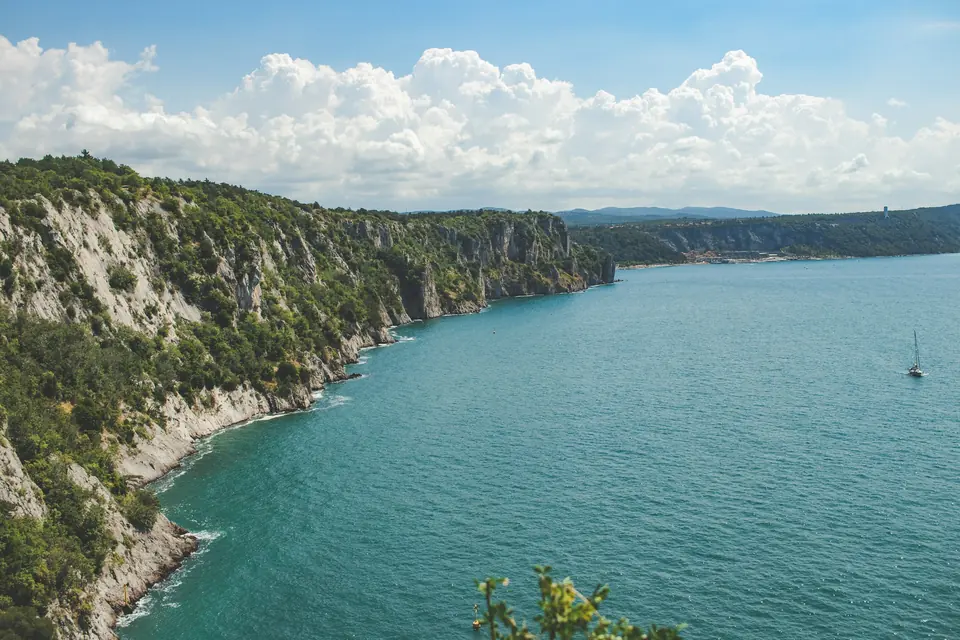
Trieste between the sea and the Karst: ideas for a day out
In short
In Trieste the sea and the Karst are right next to each other: the limestone plateau is only a few kilometres from the centre, and from up there you see the whole gulf. The easiest plan is to go up to the Karst in the morning, while the air is cool and clear (Strada Napoleonica, the Opicina Obelisk, Grotta Gigante or an osmiza), then come down to the sea in the afternoon at Barcola, Miramare or along the coast road towards Sistiana. You can do it without a car, using city buses and a bit of walking.
Why combine the sea and the Karst in one day
Trieste is squeezed between water and rock. Behind the houses rises the Karst, a limestone plateau of low woodland, dry-stone walls and small bilingual villages; in front lies the gulf. Only a few hundred metres of height and a few kilometres separate the two.
That is why a “sea and Karst” day never feels rushed: it is simply the most natural way to understand the city. In the morning you look down on Trieste; in the afternoon you see it from sea level. If you have already covered the centre with Trieste in two days, this is the ideal day to add.
Morning on the Karst
Go up early. The plateau is noticeably cooler than the city, the paths are quiet and the morning light makes the gulf look sharper. These are the main stops, all close to one another.
Strada Napoleonica (Strada Vicentina)
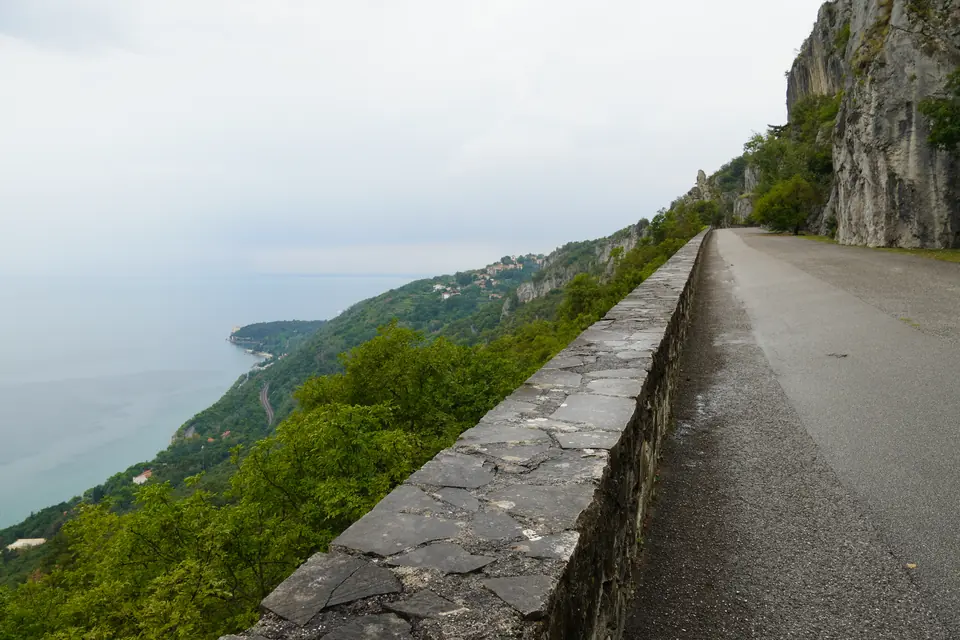
This is the locals’ favourite panoramic walk: a wide, almost level path, partly cut into the rock, running along the edge of the Karst from Opicina towards Prosecco. It is about 5 km one way, roughly an hour and a quarter at an easy pace.
On one side are limestone walls where you will often see climbers practising; on the other, the gulf, the port, Miramare Castle on its headland and, on clear days, the coast of Istria. You don’t need to be a hiker, just comfortable shoes.
Tip: to avoid walking back the same way, go from Opicina towards Prosecco and catch a bus back into town from there. Check routes and times on the Trieste Trasporti website before you set off.
The Opicina Obelisk
The Napoleonica starts at the Obelisk, raised in the 19th century to mark the new road to Vienna. Next to it is a viewpoint that takes in the entire city, worth a stop even if you don’t have time to walk. Buses run up to Opicina from the centre; as for the historic Opicina tram, check whether the service is running before you rely on it.
Grotta Gigante
A few kilometres from Opicina, in the hamlet of Borgo Grotta Gigante, is one of the largest show caves in the world: a single, vast chamber almost a hundred metres high. Visits are guided only, last about an hour and involve hundreds of steps down and back up.
The temperature stays at around 11°C all year, so bring a jumper even in August. Opening times and tour slots change with the seasons, so check the official website before you go.
Osmize: a Karst tradition
Osmize are one of the most distinctive things on the Karst. They are family farms that, for a few days or weeks each year, open their homes and courtyards to sell what they produce: wine, eggs, cheese, cured meats. The custom dates back to Habsburg times and is still very much alive.
There is no fixed calendar; each one opens only at certain times. The sign is a leafy branch hung upside down at crossroads and above the gate. The food is simple, often served outdoors, with a glass of Terrano or Vitovska, the typical Karst wines.
Tip: up-to-date calendars of which osmize are open are published online. Check the evening before, as openings change from week to week.
Afternoon by the sea
After lunch, head down to the coast. You have three options, depending on the weather and how much energy you have left.
Barcola
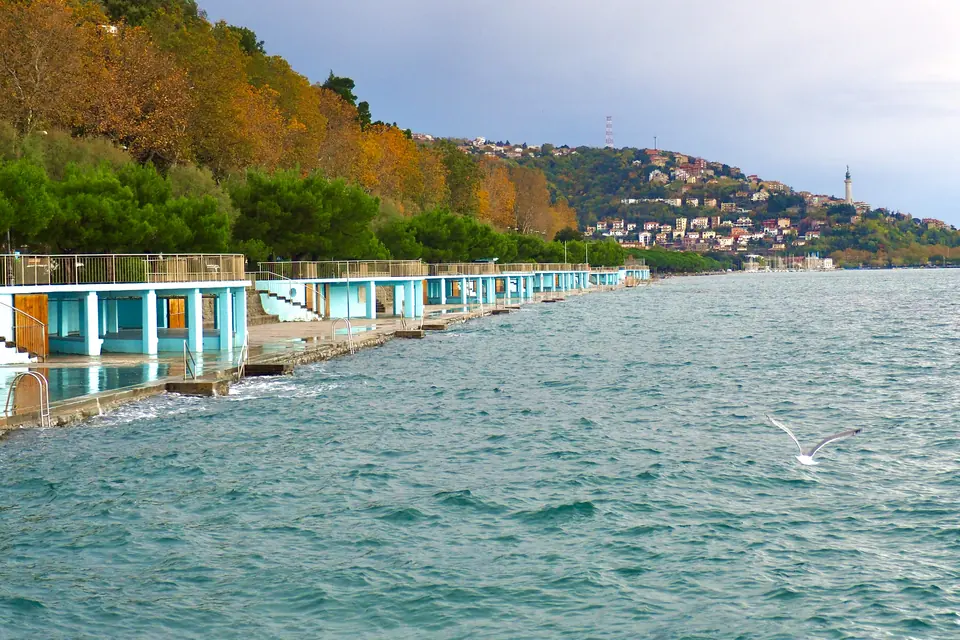
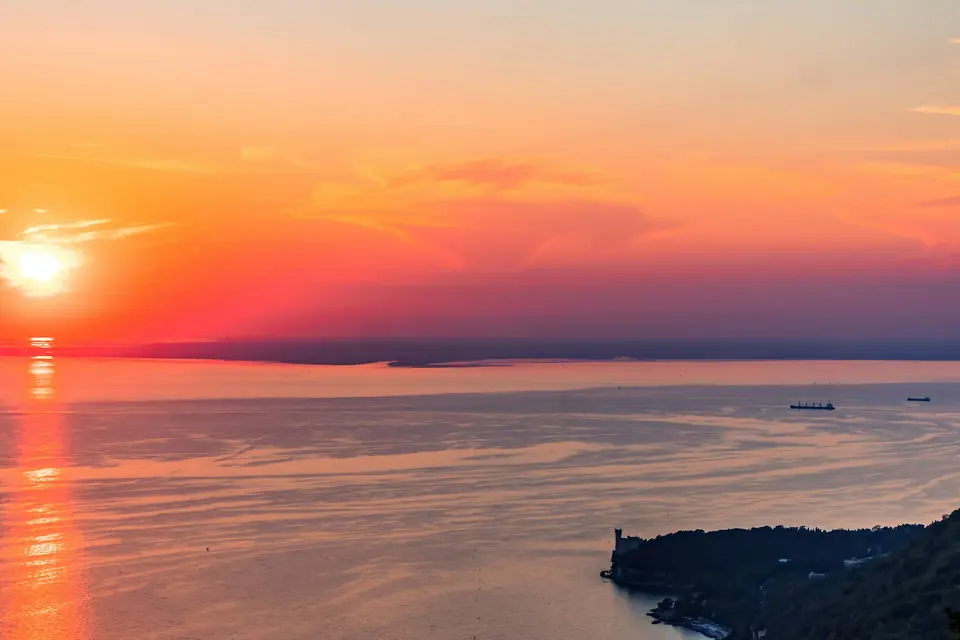
Barcola is where Trieste goes to the seaside: a long promenade with concrete bathing platforms, known locally as “topolini”, and a pine grove. People sunbathe, climb down ladders straight into the sea and stay for the sunset over the gulf. Bus line 6 gets you there from the centre in 10–15 minutes.
Miramare Castle
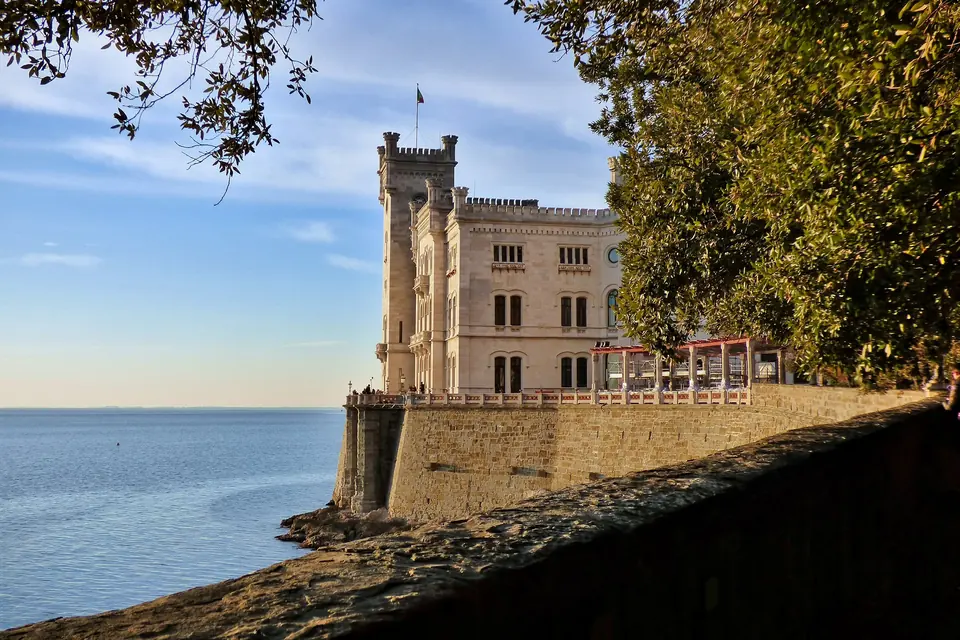
Miramare Castle, built for Archduke Maximilian of Habsburg, stands on a headland just beyond Barcola. Even if you skip the interiors, the park and the seaside terrace are worth an afternoon. Right next to it is the small harbour of Grignano, with clear water and rocks.
The coast road to Sistiana
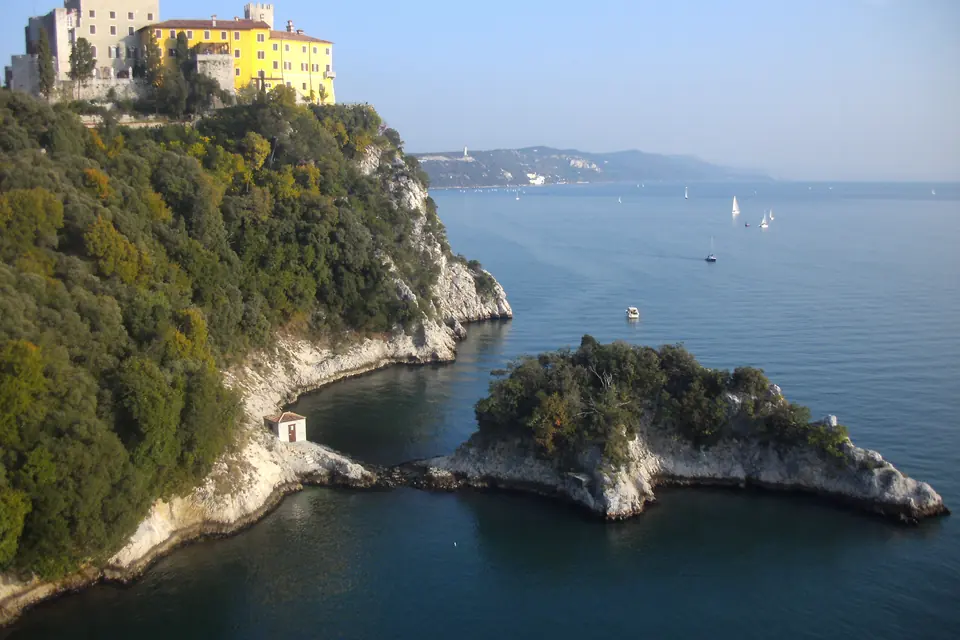
With a car you can follow the Strada Costiera north-west: the road runs high above the sea, with small lay-bys and paths leading down to pebble beaches. It ends at the bay of Sistiana, a good place for a swim and an aperitivo. From there Duino is close by; you’ll find it in our guide to day trips from Trieste.
Two ways to plan the day
With a car
| Approximate time | Stop |
|---|---|
| 8.30 | Leave the centre for Opicina |
| 9.00–10.30 | Obelisk and the first stretch of the Strada Napoleonica, there and back |
| 11.00–12.00 | Grotta Gigante (guided tour) |
| 12.30–14.30 | Lunch at an open osmiza or a Karst trattoria |
| 15.00–18.00 | Down to the Strada Costiera, swim at Sistiana or a beach along the coast |
| 19.00 | Sunset at Barcola or Miramare, back into town |
A car gives you freedom for the osmize, which are often in small villages with few buses. If you are driving, go easy on the wine.
Without a car
| Approximate time | Stop |
|---|---|
| 8.30 | Bus from the centre up to Opicina |
| 9.00–10.30 | Obelisk and the Strada Napoleonica to Prosecco |
| 11.00 | Bus from Prosecco back into town (check routes) |
| 12.30 | Light lunch in town or at Barcola |
| 14.00–17.00 | Line 6 to Grignano: Miramare park and castle |
| 17.30–19.30 | Stroll along Barcola until sunset, back on foot or by bus |
Without a car, Grotta Gigante is harder to fit into the same day. If it matters to you, swap the Napoleonica for the cave and check bus connections from Opicina.
What to bring
- Comfortable shoes with decent grip: the Napoleonica is easy, but it is an unpaved path.
- Water: there are no cafés or fountains along the way.
- A jumper for Grotta Gigante.
- Swimwear, a towel and water shoes for Barcola or Grignano.
- A hat and sun cream: there is little shade on the Karst in the middle of the day.
When to go
Spring (April–June): the Karst is green and in flower, and the sea warms up from late May. A great time for walking.
Summer (July–August): Karst mornings are pleasant, but it gets hot after midday. Start early and give the sea more time.
Autumn (September–November): the best season on the plateau. In October the wild smoke bush turns the Karst red, and many osmize open after the grape harvest.
Winter: swimming gives way to crisp, clear walks, especially on Bora days, when the sky is spotless but the wind on the Napoleonica can be strong. Read our guide to Trieste in the Bora first.
For the best spots to look out over the gulf, from above and from the water’s edge, see our guide to sea views in Trieste. And if you are still planning your stay, have a look at the rooms at Casa Bora in the Borgo Teresiano, handy for buses both up to the Karst and out to Barcola.
Frequently asked questions
Can you visit the Karst from Trieste without a car?
Yes. Opicina and the start of the Strada Napoleonica are served by city buses from the centre, and you can take a bus back from Prosecco. For osmize in the smaller villages a car is easier; check routes and times on the Trieste Trasporti website.
How long is the Strada Napoleonica?
About 5 km between the Opicina Obelisk and Prosecco, almost entirely flat. It takes roughly an hour and a quarter one way at an easy pace and is fine for non-hikers.
What is an osmiza?
An osmiza is a Karst farm that opens for limited periods each year to sell its own wine and produce, which you eat and drink on the spot. You recognise them by a leafy branch hung upside down, and current openings are listed on calendars online.
Can you swim in Trieste after a morning on the Karst?
Yes, the sea is only a few kilometres away. The easiest spot is Barcola, 10–15 minutes from the centre on bus line 6; further along are Grignano, below Miramare Castle, and the bay of Sistiana.
When is the best time for this day out?
From May to October you can combine a walk with a swim. Autumn is the most beautiful season on the Karst, with the red smoke bush and many osmize open.
Information is indicative: opening times, prices and services may change, so always check the official websites before your visit.